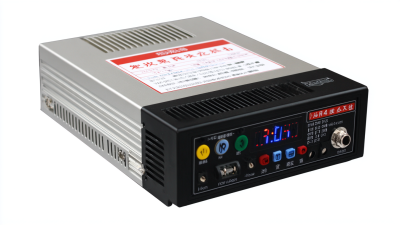
Hey, in this fast-changing world of power electronics, the market for Thyristor Controllers is really moving forward with some pretty exciting advancements. I was chatting with Dr. Edward Thompson from PowerTech Solutions, and he mentioned, “Innovations in Thyristor Controllers are absolutely key to making our energy use more efficient.” As folks all over the world look into this sector, it’s more important than ever to keep up with the latest trends.
These Thyristor Controllers are pretty much the backbone when it comes to controlling and managing power. Lots of different industries depend on them, and honestly, everyone’s always looking for better performance. Right now, manufacturers are mainly working on improving how they manage heat and speed up response times—things that really matter for meeting today’s energy needs.
That said, it’s not all smooth sailing. Some companies are having a tough time keeping up with the crazy pace of tech changes. And, because everyone wants to keep costs low, sometimes corners get cut, and quality can suffer a bit. It’s definitely important for buyers to stay sharp, weighing innovation against reliability. The future of the Thyristor Controller market looks super exciting—there’s a lot to look forward to, but it’s gonna take some careful thinking from everyone involved.

Emerging Technologies Influencing Thyristor Controllers in 2026
The landscape of thyristor controllers is evolving rapidly due to emerging technologies. By 2026, advancements in semiconductor materials, such as silicon carbide (SiC) and gallium nitride (GaN), will heavily influence the efficiency of these controllers. Reports estimate that SiC devices alone could reduce energy losses by 50% compared to traditional silicon solutions. This shift not only enhances performance but also broadens the application range for high-power operations.
Another significant aspect is the integration of smart technologies. With the rise of IoT, thyristor controllers are becoming more connected. Enhanced data analytics can lead to better performance monitoring and predictive maintenance. This change is expected to reduce downtime by up to 30% in industrial applications. However, the shift towards digital connectivity raises concerns about cybersecurity. Companies must ensure their systems are robust and secure against potential threats.
Moreover, the increase in renewable energy sources calls for more adaptive thyristor control solutions. As the demand for more sustainable practices grows, controllers that manage energy flow effectively in wind and solar systems become paramount. Yet, the adaptation process can be slow, with existing infrastructure presenting barriers. These challenges highlight the importance of continuous innovation and development in the field.
2026 Top Thyristor Controller Trends for Global Buyers
| Trend |
Description |
Impact Level |
Forecasted Adoption Rate (%) |
| Wide Bandgap Semiconductors |
Enhanced efficiency and thermal performance due to SiC and GaN technologies. |
High |
45% |
| Smart Control Algorithms |
AI and machine learning integration for real-time optimization. |
Medium |
30% |
| Modular Design |
Flexibility in scaling systems for various applications. |
High |
50% |
| IoT Integration |
Real-time monitoring and predictive maintenance capabilities. |
Medium |
35% |
| Increased Automation |
Greater reliance on automated systems for enhanced efficiency. |
High |
60% |
Key Market Players in the Global Thyristor Controller Industry
The global thyristor controller market is experiencing significant shifts. Major players are adapting to technological advancements and changing customer needs. Recent reports indicate that the market is expected to grow at a compound annual growth rate (CAGR) of 7.5% from 2023 to 2028. This growth highlights the importance of innovation and the need for reliable solutions.
Key market players are focusing on enhancing their product offerings. Many companies are investing in research and development to improve efficiency and sustainability. A recent analysis revealed that nearly 40% of the major companies are prioritizing eco-friendly manufacturing processes. This trend aligns with the increasing demand for energy-efficient systems, taking into account both industrial and consumer preferences.
However, challenges remain. The need for skilled professionals in this sector is critical. According to industry insights, only 25% of companies feel confident in their current workforce's capabilities. Bridging this talent gap will be essential for fostering innovation. Increasing collaboration between academia and industry could help address these issues, ensuring continuous advancement in thyristor technology.
Sustainability Trends Shaping Thyristor Controller Production
The production of thyristor controllers is increasingly influenced by sustainability trends. As the global focus shifts towards eco-friendly technologies, manufacturers are seeking ways to reduce their carbon footprints. This involves utilizing renewable energy sources in production processes. Implementing energy-efficient methods lowers emissions and production costs. There’s a growing need for transparency in sourcing materials. Buyers want to know the environmental impact of their purchases.
Another trend is the emphasis on recycling materials. Many producers are exploring ways to incorporate recycled components in thyristor controllers. This practice not only minimizes waste but also satisfies eco-conscious consumers. However, challenges remain in achieving high efficiency while using recycled materials. It requires further research and development to improve performance. Significant improvements in technology are necessary for a sustainable future.
The industry is also witnessing a rise in collaboration among stakeholders. Companies are joining forces to share best practices in sustainability. This collective effort fosters innovation and drives change. However, not all partnerships yield immediate results. Progress can be slow, and the path to sustainability is often fraught with obstacles. Continual reflection on strategies is essential for long-term success.
Consumer Preferences Impacting Thyristor Controller Design
Consumer preferences are driving significant changes in the design of thyristor controllers. Recent reports indicate that the demand for energy-efficient solutions has surged by over 30% in the past five years. This trend reflects a global shift towards sustainability. Consumers are looking for equipment that not only performs well but also minimizes energy consumption. As a result, manufacturers are developing more advanced Thyristor Controller For Heater models that optimize thermal management.
Market analysts predict that by 2026, smart features will be a key factor influencing buyer decisions. The integration of IoT technology into thyristor controllers is becoming a priority. A study found that around 45% of consumers now prefer controllers with remote monitoring capabilities. This functionality enables users to oversee operations from anywhere, enhancing user experience. However, the challenge remains in striking the right balance between advanced features and ease of use. Many users still favor simplicity over sophistication.
Above all, consumer feedback is essential for driving these innovations. Understanding user experiences can guide engineers in refining designs. Many manufacturers are investing in R&D to analyze customer preferences more deeply. This ongoing process will ultimately shape the future of thyristor controllers in various industries, including heating applications.
Advancements in Power Electronics for Thyristor Controllers
The advancements in power electronics for Thyristor Controllers have transformed the landscape of industrial applications. These controllers are essential for efficient power management. They enhance performance and reliability in various sectors, such as energy, transportation, and manufacturing. Innovative designs are emerging, focusing on energy efficiency and reducing operational costs.
Tips: Ensure your Thyristor Controller is compatible with existing systems. Compatibility can save time and reduce upgrade costs.
New semiconductor materials are paving the way for high-performance Thyristor Controllers. Silicon carbide and gallium nitride are at the forefront. These materials provide improved thermal conductivity and switching speeds. But they can also lead to increased complexity in design and integration.
Tips: Collaborate with experts for effective implementation. Expert advice can help mitigate potential challenges during integration.
As technological developments continue, the need for better thermal management is crucial. Uncontrolled heat can diminish the performance of Thyristor Controllers. Enhanced cooling solutions are vital. Users must consider the thermal aspects in their designs. Real-world applications often reveal gaps in thermal handling capacity, leading to potential system failures.
Regional Insights into Thyristor Controller Market Dynamics
The global thyristor controller market is experiencing significant growth, driven by advancements in technology and increasing demand from various sectors. According to a recent industry report, the market is projected to reach USD 7 billion by 2026. This growth is primarily fueled by the need for efficient power management systems, particularly in renewable energy applications. Regionally, Asia-Pacific leads the market, with countries like China and India investing heavily in electrical infrastructure.
In North America, the emphasis is shifting towards smart grid technologies. This transition will play a crucial role in enhancing the utility of thyristor controllers, including the 3 Phase Thyristor Power Controller. Professionals highlight that integrating these systems can result in substantial energy savings. Yet, challenges such as regulatory hurdles and the need for skilled labor remain. The persistence of these issues is an area for reflection among stakeholders.
Tips: Keep abreast of regional market trends. Technical training for staff is essential to maximize equipment efficiency. Always consider the environmental impact of thyristor controllers in your projects.
2026 Top Thyristor Controller Trends for Global Buyers
Future Challenges and Opportunities in Thyristor Controller Development
The development of thyristor controllers is entering a critical phase. As technology advances, the challenges in this field are becoming more complex. Engineers must consider efficiency, thermal management, and integration with renewable energy systems. Developing a robust
3 Phase Thyristor Controller For Heater
is essential for industrial applications. These controllers are designed to handle higher loads, making them crucial in high-demand scenarios.
One significant challenge lies in enhancing reliability while reducing costs. High-performance components can drive prices up, making affordability a key concern for manufacturers. Furthermore, the integration of advanced diagnostics into thyristor controllers is lagging. This gap can lead to inefficiencies and system failures, requiring constant monitoring and maintenance.
On the other hand, opportunities are emerging in smart grid technology. Thyristor controllers can be optimized for real-time data processing. This allows for predictive maintenance, improving system longevity. Additionally, there's a growing demand for eco-friendly solutions. Innovations in thyristor technology could significantly reduce energy consumption. Developing sustainable practices will be paramount for future success.
Embracing these trends can help tackle the challenges ahead while paving the way for a more efficient energy landscape.
Optimizing Energy Efficiency with Single-Phase Power Controllers: A Comprehensive Guide
In today’s industrial landscape, optimizing energy efficiency is not just a goal but a necessity. Single-phase power controllers play a pivotal role in achieving this efficiency in various thermal processing applications. Industry reports suggest that energy costs can account for up to 30% of total production expenses in manufacturing. With the correct implementation of power controllers, companies can significantly reduce these overhead costs while enhancing performance.
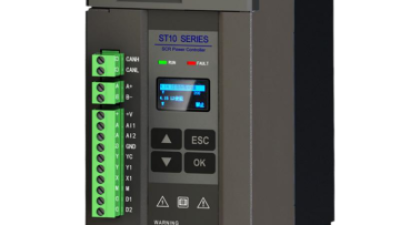
The ST series single-phase power controllers exemplify how compact designs can lead to efficient space utilization in cabinets, allowing for easier installation without compromising performance. Their user-friendly features, such as straightforward wiring and a dual-language liquid crystal display, ensure that operators can monitor and adjust system parameters effortlessly. This design consideration is crucial in sectors like vacuum coating and glass fiber manufacturing, where precision in temperature control directly impacts product quality.
Moreover, the versatility of these controllers makes them suitable for various applications, including tunnel kilns and roller kilns. Manufacturers utilizing such technologies can achieve enhanced thermal efficiency, thereby improving overall production output. Studies indicate that optimizing thermal processes with advanced control systems can result in energy savings exceeding 20%, illustrating the critical role of single-phase power controllers in modern manufacturing efficiency strategies.
FAQS
: The market is expected to grow at a 7.5% CAGR due to innovation and the demand for reliable solutions.
Companies aim to enhance efficiency and sustainability in response to changing customer preferences and industrial needs.
About 40% of major companies prioritize eco-friendly processes, aligning with the demand for energy-efficient systems.
A talent gap exists; only 25% of companies trust their workforce's abilities, highlighting a need for skilled professionals.
Silicon carbide and gallium nitride improve performance but add design complexity, requiring expert collaboration for effective implementation.
Uncontrolled heat reduces performance, making enhanced cooling solutions necessary to prevent system failures in real applications.
Balancing reliability with cost, and integrating advanced diagnostics are key concerns that can lead to inefficiencies.
They can be optimized for real-time data processing, allowing predictive maintenance and improved system longevity.
Innovations aimed at reducing energy consumption and developing sustainable practices could lead to significant market advancements.
Users must ensure compatibility with existing systems to save time and reduce upgrade costs during integration.
Conclusion
The article "2026 Top Thyristor Controller Trends for Global Buyers" examines the emerging technologies and key market players shaping the Thyristor Controller industry in the coming years. It discusses significant sustainability trends that are influencing production practices, as well as how consumer preferences are driving innovative design in Thyristor Controllers. Furthermore, advancements in power electronics are highlighted as crucial developments that will enhance the performance and efficiency of these controllers.
Regional insights provide a comprehensive understanding of market dynamics, while the article also identifies future challenges and opportunities that may arise in Thyristor Controller development. Overall, the article emphasizes the importance of adapting to these trends to remain competitive in the evolving landscape of Thyristor Controllers.


 Who we are
 Discover Who we are
 Power Solutions
 Discover Power Solutions
 Media
Media
 Discover Media
 Services
 Discover Our Services
 Get in touch