Inquiry
Form loading...
0%

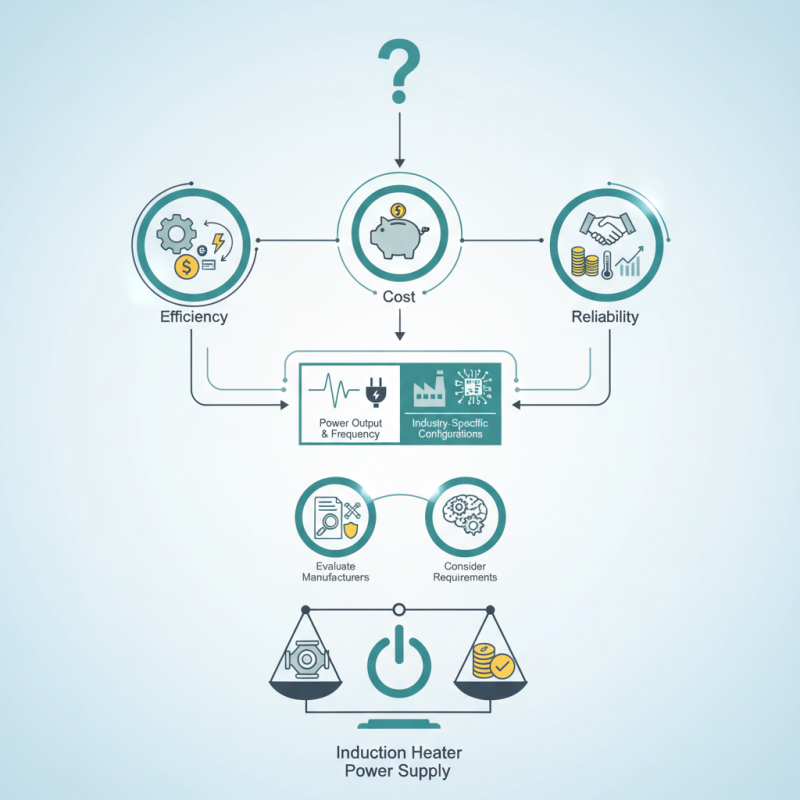
Choosing the right Induction Heater Power Supply can honestly feel pretty overwhelming. There are so many options out there that it’s easy to get lost in the details. And each power supply has its own set of features and perks—so it’s not just a simple pick-and-go.

The key is really understanding what your induction heating setup actually needs. Are you after maximum efficiency, trying to keep costs down, or maybe prioritizing reliability? Things like power output and frequency levels are worth thinking about too. Different industries often require specific setups to work best, so having that in mind can really help narrow down your choices.

Don’t forget to do a quick vetting of manufacturers as well. Some brands offer awesome support and solid warranties—which can seriously influence your decision. But honestly, it’s easy to overlook some small details when you’re deep in the buying process. So, take a step back, breathe, and think about what truly fits your specific situation.

At the end of the day, the perfect induction heater power supply isn’t just about going for the priciest option. It’s all about finding that sweet spot between performance and cost—that balance that works for you and your project.

How to Choose the Right Induction Heater Power Supply?

Understanding Induction Heaters and Their Power Requirements

Induction heaters are powerful tools for heating metal through electromagnetic induction. They require a reliable power supply to function effectively. Understanding their power requirements is crucial. Induction heaters usually operate in specific voltage and frequency ranges. The right power supply ensures consistency and efficiency in heating.

When selecting a power supply, consider wattage. The heater's wattage rating indicates how much power it consumes. Make sure the power supply can handle the load. If not, it could lead to overheating or failure.

Tips: Always check the specifications carefully. Ensure the power supply matches the heater's needs. Additionally, monitor the performance during use. If you notice irregular heating, it may be time to reassess your power supply.

Another important aspect is the type of application. Different applications require varying degrees of heating power. For instance, melting may need high power, while surface hardening may need less. Make sure to evaluate your specific needs.

Tips: Use a flexible power supply if you switch applications often. It can adapt to different power needs. This way, you won’t have downtime. Always keep the workspace safe, and ensure proper ventilation when using induction heaters.

Key Specifications to Consider for Induction Heater Power Supplies

Choosing the right induction heater power supply involves understanding key specifications. Start with voltage and current ratings. These determine how well the unit will perform. Standard voltage levels usually range from 110V to 480V. Find the voltage that matches your heating requirements.

Next, consider the power output, measured in kilowatts (kW). A higher kW means faster heating. However, aiming for too high can lead to inefficiencies. It’s essential to find a balance. Additionally, the frequency of the power supply is crucial. Typical frequencies are between 1 kHz and 50 kHz. This affects heating speed and efficiency.

Cooling requirements are often overlooked. Some power supplies need external cooling systems. Assess if your workspace can accommodate this. Lastly, ensure any safety features are in place. Overcurrent protection, thermal shutdown, and short-circuit protection are pivotal. Ignoring these can lead to significant mishaps. Careful evaluation of these specifications makes a difference.

Evaluating the Compatibility of Power Supply and Induction Heater

Evaluating the compatibility of a power supply with an induction heater is crucial for efficiency and performance. Many industry reports emphasize that a mismatched power supply can lead to suboptimal heating and increased energy consumption. For instance, selecting an Induction Heater 1000w that does not align with the power supply specifications may cause system failures or erratic performance. A power supply must provide the correct voltage and current ratings, tailored to the requirements of your induction heater.

In practice, users often overlook the need for proper compatibility checks. Data indicates that up to 25% of induction heating issues stem from electrical mismatches. A power supply with a lower output than required will struggle, potentially damaging the induction heater. Conversely, an oversized power supply can lead to excess heat generation, risking component integrity. It’s essential to analyze the power curves and operational limits of both devices before making a decision. This process may take time and require thorough testing to identify the most efficient options available.

Power Supply Compatibility with Induction Heaters

This chart illustrates the power supply compatibility ratings of various induction heater models based on voltage and current specifications. Each bar represents the percentage of compatibility for different power supply ratings suitable for induction heaters.

Determining the Required Power Output for Your Applications

When selecting an induction heater power supply, determining the required power output is crucial. Different applications have varied power needs. For example, welding might require 30 kW, while heating small metal components could only need around 5 kW. It’s essential to assess your specific application requirements before making a decision.

Tips: Consider analyzing similar applications in your industry. Understanding typical power outputs can guide your selection process. Review industry reports for benchmarks. In 2022, research indicated that 75% of users underestimated their power requirements, leading to inefficiencies.

Many users overlook the importance of power matching. An inductive power supply that does not meet the application’s needs can lead to poor performance. If your chosen supply is too powerful, it may waste energy. Conversely, a supply that’s too weak may not achieve desired results. Regularly testing and adjusting your setup can help optimize performance and prevent potential damage. Listening to usage data is critical.

Exploring Different Types of Induction Heater Power Supplies

Induction heaters require the right power supply for optimal performance. Understanding the types of induction heater power supplies can help ensure efficiency and effectiveness in applications. There are several options, ranging from specialized DC supplies to more general AC sources. Each has distinct advantages depending on the specific needs of the application.

One common type is the high-frequency Induction Power Supply. These systems usually operate between 20 kHz and 100 kHz. According to industry reports, these supplies can significantly improve energy efficiency, achieving over 90% in some cases. The output is critical, as it determines the heating speed and quality. Inconsistent power supply can lead to uneven heating, posing challenges in processes like metal hardening or soldering.

Another type is the low-frequency induction power supply, typically below 20 kHz. It is ideal for heavier loads and larger workpieces. However, it may provide less precise heating. Choosing between these types can be complex. Users often overlook the intended application and demand. They might prioritize cost over efficiency, leading to longer cycle times. Understanding the specifications and requirements is crucial in selecting the right induction power supply.

How to Choose the Right Induction Heater Power Supply? - Exploring Different Types of Induction Heater Power Supplies

Power Supply Type Voltage Range (V) Current Rating (A) Frequency (kHz) Efficiency (%) Use Case
Low Frequency 200-400 30-100 1-20 80-90 Brazing, Soldering
Medium Frequency 400-800 20-60 20-60 85-95 Heat Treatment, Forging
High Frequency 800-1200 10-30 50-400 90-98 Induction Melting, Plasma Treatment
Ultra High Frequency 1200-2000 5-15 400-1000 95-99 High-Precision Applications

Assessing Efficiency and Performance of Power Supply Options

When selecting an induction heating power supply, efficiency and performance are crucial. Research indicates that optimal efficiency can exceed 90% in well-designed systems. However, many still fall short of this benchmark. For instance, some older models operate at only 70% efficiency. This discrepancy can lead to wasted energy and higher operational costs.

Performance is also tied to specific requirements. Different applications need varying power levels and frequency ranges. A study showed that using variable frequency drives can enhance the responsiveness of induction heating power supply systems. Yet, too often, users underestimate the importance of these adjustments. Choosing a power supply without considering these factors might lead to inadequate heating or even equipment damage.

Another area to consider is thermal management. Power supplies generate heat, which can affect their performance over time. A report highlighted that inadequate cooling can reduce equipment lifespan by up to 30%. It's essential to incorporate cooling solutions into the system design. This oversight can turn a seemingly efficient power supply into a short-term solution only. Regular analysis and adjustments based on real-time data are necessary for maintaining the desired performance levels.

Budgeting and Cost Considerations for Induction Heater Systems

How to Choose the Right Induction Heater Power Supply?

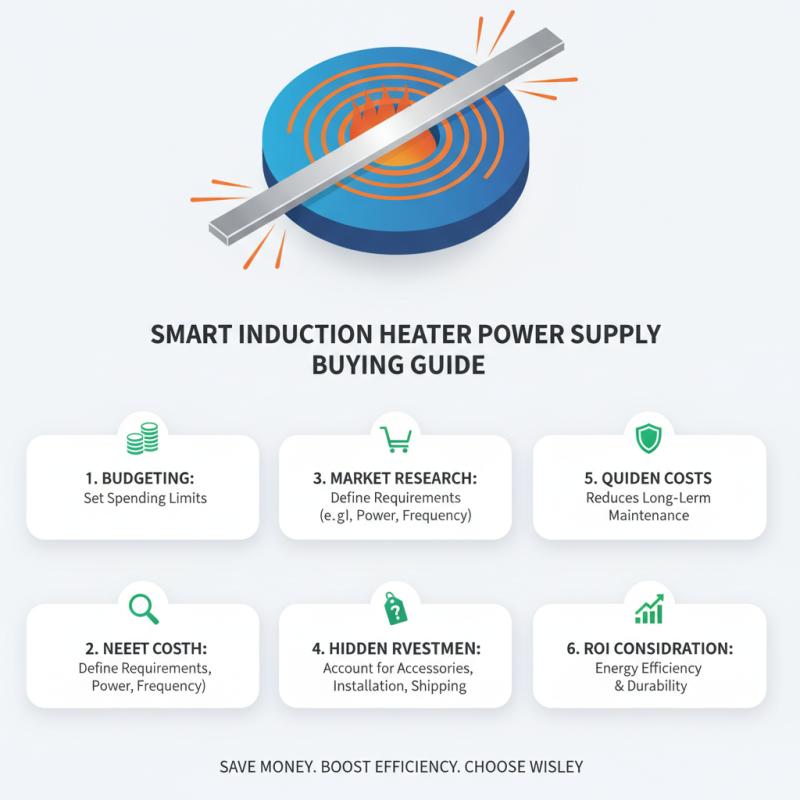
Choosing the right power supply for an induction heater involves various financial considerations. Budgeting is essential to avoid overspending on unnecessary features. Determine your specific needs to set realistic limits. Research market prices for different systems. Some cheaper models may come with hidden costs. Investing in quality can save maintenance expenses later.

Cost considerations don't just cover equipment price. Installation can add significantly to overall expenses. Factor in potential energy costs, too. Higher power ratings often mean higher energy consumption. An energy-efficient model may have a higher initial cost, but it often pays off in the long run.

While searching for the best option, it's easy to overlook small details. For example, warranties can vary widely. A longer warranty may suggest better reliability. Additionally, remember to assess local electrical requirements. A poorly matched power supply can lead to inefficient operations or even damage. Reflect on the total cost of ownership, not just the purchase price.

Enhancing Circuit Performance with PDA103 Series Fan Cooling Programmable DC Power Supplies: Insights from Industry Data Reports

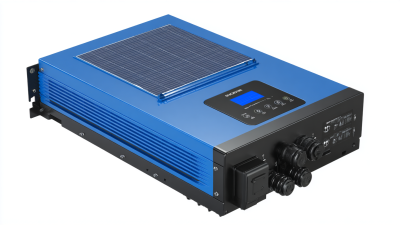
The PDA103 series programmable DC power supply introduces an advanced solution for enhancing circuit performance through efficient fan cooling technology. With output capabilities of up to 2.4kW, and adjustable voltage from 6V to 600V and current from 1.3A to 300A, this power supply caters to industries that require high precision and stability. According to industry reports, sectors such as semiconductor manufacturing and laser technologies demand power supplies that not only meet stringent performance specifications but also adapt seamlessly to varying operational scenarios. The PdA103 series is engineered to excel in these environments, leveraging its compact 1U chassis design to fit into diverse setups while maintaining optimal thermal management through effective fan cooling.

Recent data indicates that the need for programmable power supplies in high-tech industries has surged, driven by the increasing complexity of electronic devices and rapid advancements in technology. The PDA103 series aligns with these industry trends, providing reliable power solutions that ensure consistent performance during high-load applications. The fan cooling feature significantly contributes to maintaining performance stability, crucial for delicate processes such as magnet acceleration and laboratory experiments where power integrity is non-negotiable. Reports suggest that systems integrating enhanced cooling capabilities can experience efficiency gains of up to 15%, underscoring the significance of thermal management in modern power supply design.

FAQS

: What are the benefits of maintaining a consistent routine?

: A consistent routine can enhance productivity and create a sense of stability. It helps to manage time effectively.

How can someone improve their time management skills?

Prioritize tasks and use a planner. Break tasks into smaller steps. Avoid multitasking; focus on one task at a time.

Why is it important to set realistic goals?

Realistic goals are achievable and help maintain motivation. They prevent feelings of failure and promote gradual progress.

What strategies can help reduce stress?

Practice deep breathing or mindfulness. Regular physical activity and adequate sleep also contribute to stress reduction.

How can one maintain focus while working?

Limit distractions. Create a designated workspace. Use techniques like the Pomodoro Technique to manage attention spans.

What role does self-reflection play in personal development?

Self-reflection allows for recognizing strengths and weaknesses. It encourages growth but requires honesty and openness in assessments.

Conclusion

Choosing the right Induction Heater Power Supply is crucial for optimizing the performance of your induction heating applications. Understanding the power requirements of induction heaters is the first step, which includes familiarizing yourself with key specifications such as voltage, current, and frequency. It's important to evaluate the compatibility between the power supply and the induction heater to ensure they work efficiently together.

Furthermore, determining the required power output based on your specific applications will help in selecting the appropriate power supply. Exploring various types of induction heater power supplies and assessing their efficiency and performance can significantly impact your system's overall effectiveness. Lastly, budgeting is an essential factor to consider, as it will aid in making informed decisions without compromising on quality or performance.

Ethan

Ethan

Ethan is a dedicated marketing professional at Sichuan Yingjie Huanyu International Trading Co., Ltd., where he leverages his extensive knowledge of the company’s products to drive engagement and visibility. With a passion for international trade and a keen understanding of market dynamics, Ethan......
Previous Comprehensive Insights into Scr Power Controller for Global Buyers