Getting a handle on the different types of Voltage Power Supplies is pretty important these days, especially with how tech-heavy everything's become. Different projects or devices often need their own special power setups. Choosing the right Voltage Power Supply can really make a difference—helping things run smoothly and keeping everything safe.
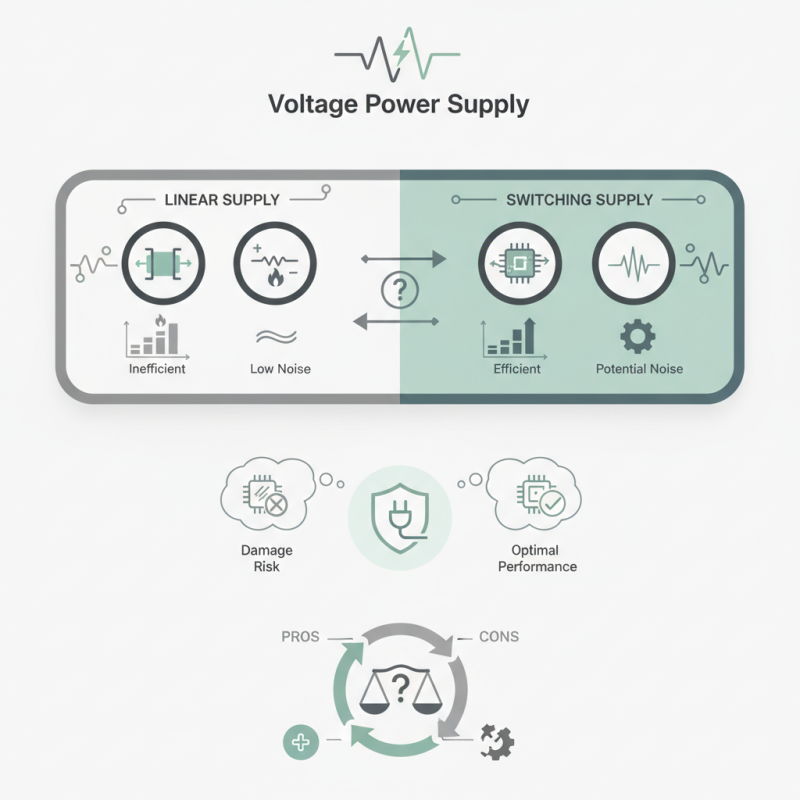
You might be wondering, what are the main kinds out there? Well, most folks talk about linear and switching supplies. Each has its own perks and quirks. For example, linear supplies are super straightforward, but they can be kind of inefficient, especially when you need a lot of power. On the flip side, switching supplies are usually smaller and more energy-efficient, but they might introduce some noise, which can be a pain.
It’s definitely important to think about what you’re using these supplies for. Picking the wrong one could mean your device doesn’t work properly, or worse, gets damaged. Honestly, it’s worth spending some time figuring out which type fits your needs best. Brands like Mean Well and TDK-Lambda offer a ton of options, so take your time and weigh the pros and cons before jumping in.
Understanding Voltage Power Supply: An Overview
Understanding voltage power supply is crucial for both hobbyists and professionals. It comes in various types, catering to different applications. Basic categories include linear and switching power supplies. Linear supplies provide stable voltage but can be large and inefficient. Meanwhile, switching supplies are compact and efficient, yet they can introduce electrical noise.
A recent industry report noted that switching power supplies are expected to dominate the market, projected to grow by 8% annually through 2025. This shift is driven by their versatility in applications, from consumer electronics to industrial machinery. It's essential to consider the specific requirements of your project before selecting a type.
Tips: When choosing a power supply, always check the voltage and current ratings. Look for efficiency ratings as well. Inadequate supplies can lead to poor performance or even damage to components. Consider the need for thermal management as well.
Understanding the nuances of these power supplies illuminates their practical applications and challenges. Not all designs meet efficiency or space constraints perfectly. Continuous evaluation and testing will help refine your choices. Balancing power requirements with efficiency remains a common hurdle.
Types of AC Power Supplies: Characteristics and Applications
AC power supplies are essential in many applications. They convert the available electricity into usable forms. Various types cater to different needs and environments. For instance, linear power supplies are straightforward. They provide a stable voltage but can be inefficient. Their size can be a drawback.
Switching power supplies, however, are compact and efficient. They handle voltage variations well. These supplies adjust output to match demands. But they can produce interference, which may affect sensitive equipment. Another type includes uninterruptible power supplies (UPS). They offer backup power during outages. This is critical for maintaining operations in hospitals or data centers.
Each power supply type has unique characteristics. Understanding your needs is vital when choosing one. Oversimplifying these choices can lead to issues. It’s important to think deeper about specific applications. Not all types suit every environment. Always consider efficiency, size, and reliability.
Types of DC Power Supplies: Characteristics and Uses
DC power supplies are essential in many electronic applications. They convert alternating current (AC) to direct current (DC). Common types include linear, switching, and battery-operated supplies. Each type serves different needs and offers unique characteristics.
Linear power supplies provide stable voltage. They are simple and generate less noise. However, they can be bulky and inefficient at high currents. A design flaw might cause overheating, which is a significant concern.
Meanwhile, switching power supplies are more efficient. They use high-frequency signals to manage voltage conversion. This type is lightweight and compact. But their complexity can lead to interference in sensitive devices.
Battery-operated power supplies are portable options. They are convenient for devices that require mobility. However, they have limitations in terms of lifespan and energy capacity. Users often overlook the need for regular battery replacements.
Understanding these types helps users choose the right power supply for specific applications. Each has advantages and drawbacks that must be considered carefully.
Comparing Linear and Switching Voltage Regulators
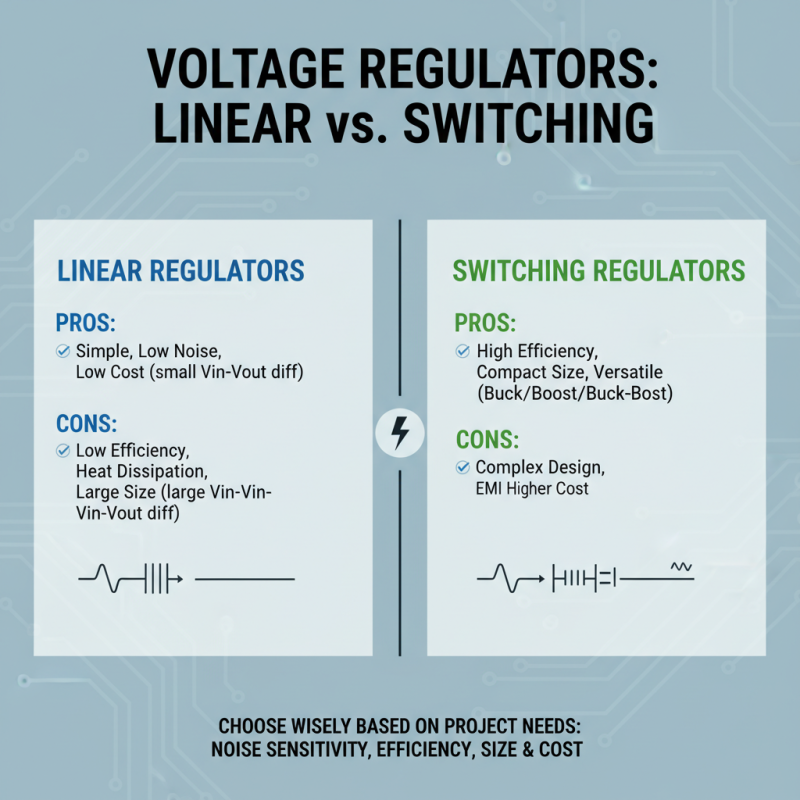
Linear voltage regulators and switching voltage regulators are two main types of power supply solutions. Each has its own strengths and weaknesses. Understanding these can help engineers select the right solution for their projects.
Linear regulators are simpler and quieter. They offer smooth output voltage, making them suitable for sensitive electronics. However, they are inefficient at high power levels. As per a report from the International Energy Agency, linear regulators can waste up to 50% of input power as heat. This inefficiency can lead to overheating and require additional cooling systems, increasing overall design complexity.
On the other hand, switching regulators are more efficient, often exceeding 90% efficiency in energy conversion. They are capable of handling varying loads without significant voltage drops. However, switching regulators tend to introduce electrical noise. This can impact nearby components, particularly in audio or radio-frequency applications. While they provide robust performance, some designs may require additional filtering to mitigate noise issues. Balancing efficiency and noise is critical for designers aiming for optimal performance.
Specialized Power Supplies: Isolated and Unregulated Types
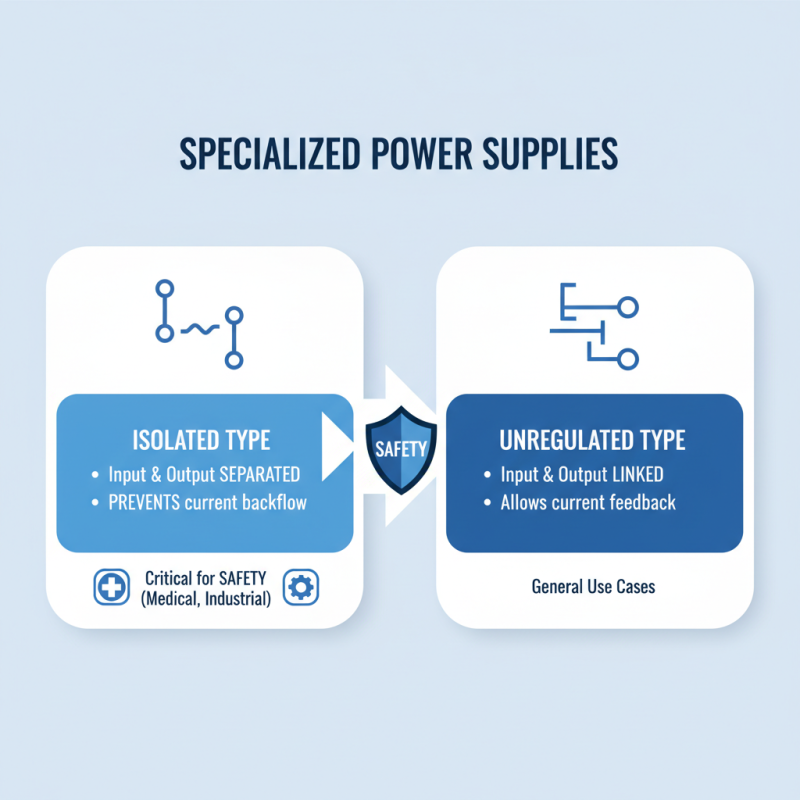
When diving into specialized power supplies, two significant categories emerge: isolated and unregulated types. Isolated power supplies safely separate the input and output sides. This prevents unwanted current from flowing back. Such supplies are critical in medical and industrial settings, where safety is paramount.
Unregulated power supplies, on the other hand, deliver less consistent voltage. Their output can fluctuate based on variations in load and input voltage. This can be problematic for sensitive electronic devices. While they are often simpler and cheaper, they lack the precision needed for many applications. It's essential to assess the requirements of your devices before selecting this type.
**Tips:** Consider the load and use case when choosing a supply type. Always prioritize safety with isolated supplies. And keep in mind: fluctuating voltage can lead to device malfunction. Reflect on your specific needs to make a better choice.
Emerging Technologies in Voltage Power Supply Systems
Emerging technologies in voltage power supply systems are shaping the future of energy efficiency. The integration of renewable energies has prompted new innovations. Advances like solid-state batteries and wireless power transfer are becoming more common. According to a recent market report, the global power supply market is expected to reach $30 billion by 2027.
One exciting development is the use of smart grids. These grids enhance energy distribution. They allow real-time monitoring and management of power supply. This leads to reduced wastage and improved reliability. Statistics show that incorporating smart technologies into energy systems can enhance efficiency by up to 40%.
Tip: Always evaluate your power supply needs. Aligning them with the latest technologies can lead to significant savings in energy costs.
Another area of growth is energy storage systems. With trends showing a rise in electric vehicle adoption, energy storage solutions are vital. They can balance supply and demand effectively. However, challenges remain, particularly regarding the longevity and sustainability of materials used in these systems.
Tip: Stay informed about the latest research. Understanding energy technologies will help you make better decisions.
What Are the Different Types of Voltage Power Supply?
| Type |
Description |
Typical Voltage Range (V) |
Applications |
| AC Power Supply |
Provides alternating current with a specific frequency and voltage. |
100-240 V |
Household appliances, industrial equipment |
| DC Power Supply |
Supplies direct current to devices requiring stable voltage. |
1-48 V |
Electronics, battery charging |
| Linear Power Supply |
Converts AC to DC using linear regulation method. |
5-30 V |
Audio equipment, precision instruments |
| Switching Power Supply |
Uses high-frequency switches to convert power efficiently. |
5-48 V |
Computers, LED lighting |
| Uninterruptible Power Supply (UPS) |
Provides backup power during outages and regulates voltage. |
12-48 V |
Data centers, sensitive electronics |
Applications and Considerations for Selecting Power Supplies
When selecting a power supply, it's crucial to consider your specific application. Different devices and systems require varying voltage levels and current capacities. A mismatch can lead to inefficiency or even damage equipment. For sensitive electronics, a regulated power supply is essential. It provides stable voltage, reducing the risk of fluctuations that might harm delicate components.
Tips: Always check the voltage requirements of your device. An incorrect voltage can cause long-term damage.
Moreover, the environment plays a significant role in your decision. Power supplies used in harsh conditions need additional protection. Factors like temperature, humidity, and dust should influence your choice. A rugged design may be necessary for industrial settings. Personal projects may allow for more flexibility, but don't overlook environmental aspects.
Tips: Assess your workspace. Is it clean and dry? If not, you may need an upgraded power supply.
Consider the overall efficiency of the power supply as well. Low-efficiency units waste energy and generate excess heat. This not only affects performance but also increases operational costs. Identify your power supply needs before making a purchase. A balance between efficiency and capability can be challenging but rewarding when done right.
Types of Voltage Power Supply
This bar chart illustrates the distribution of different types of voltage power supplies in various applications. AC Power Supplies are widely used for powering household appliances, while DC Power Supplies are commonly found in electronic devices. Universal and Switching Power Supplies cater to flexible needs across several devices.
Maximizing Performance and Efficiency: The Role of Air-Cooling Programmable DC Power Supplies in Modern Applications
The advancement of technology in various fields demands power supply solutions that not only deliver high performance but also operate efficiently. The evolution of air-cooling programmable DC power supplies has played a vital role in enhancing performance levels across multiple applications. These power supplies offer precision and stability essential for industries such as semiconductors, lasers, accelerators, and high-energy physics equipment.
Among these solutions, a notable option is an air-cooled programmable DC power supply that boasts a remarkable output power capacity of up to 15 kW. Its design caters to a standard rack-mountable format, ensuring its adaptability in diverse environments that require reliable performance. With high-precision outputs, this power supply ensures that laboratory testing and other critical applications operate without interruption. Its robustness in managing thermal conditions through effective air-cooling further enhances its usability in high-demand scenarios, supporting both current and future technological advancements.
The efficient design and functionality of modern air-cooling programmable DC power supplies mark a significant step forward in meeting the rigorous demands of contemporary applications. As industries strive to maximize performance, these power supplies provide an invaluable resource, balancing power needs with operational efficiency.
FAQS
: The article discusses various aspects of a specific subject matter.
The author uses a detailed and thoughtful perspective, highlighting both benefits and challenges.
Yes, the article provides real-life examples to illustrate key points.
The challenges include complexity and the need for careful consideration.
Yes, the article suggests reflecting on past experiences for better decision-making.
The content targets individuals interested in the subject matter.
Readers can implement strategies in their own situations based on the insights shared.
Yes, it addresses risks and emphasizes the importance of awareness.
The tone is informative but also encourages critical thinking and reflection.
Readers are encouraged to analyze their own practices and seek improvement continually.
Conclusion
Voltage power supplies are essential components in modern electrical systems, providing the necessary energy for various applications. This article provides an overview of the different types of voltage power supplies, including AC and DC variants, each with distinct characteristics and applications. AC power supplies are often utilized in residential and industrial settings, while DC power supplies are commonly found in electronic devices and renewable energy systems.
The article also delves into the comparison between linear and switching voltage regulators, highlighting their efficiency and performance differences. Additionally, it covers specialized power supplies, such as isolated and unregulated types, which cater to specific needs in various industries. With emerging technologies in voltage power supply systems, the article emphasizes the importance of understanding these options and considerations for selecting the most suitable power supply for different applications.


 Who we are
 Discover Who we are
 Power Solutions
 Discover Power Solutions
 Media
Media
 Discover Media
 Services
 Discover Our Services
 Get in touch