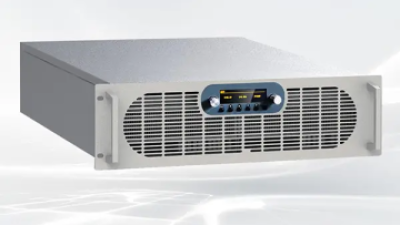
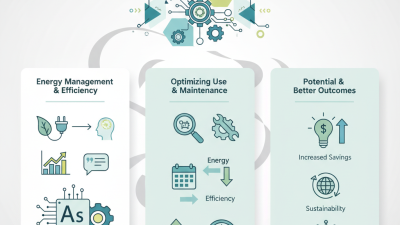
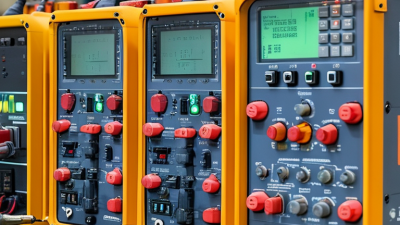
In today’s fast-changing world of power management, more and more organizations are turning to advanced solutions to keep their energy use in check. As Dr. Emily Chen from the Global Energy Solutions Group points out, “The future of energy management is really about innovative Power Controller tech.” Honestly, that really hits home for a lot of global buyers who are trying to stay ahead of the curve.
Power Controllers are pretty much essential when it comes to managing power efficiently across different industries. Right now, a lot of companies are really into Thyristor Power Controllers because they’re reliable and perform well. These gadgets let you control electrical loads with pinpoint accuracy, which can seriously boost energy savings. But, to be honest, jumping into these techs isn’t always smooth sailing. Organizations have to deal with compatibility issues and figure out how to integrate these new controllers with what they already have.
The market for Power Controllers is pretty crowded and competitive. So, it pays for buyers to really understand the different options out there and figure out what’s best for their specific needs. As this tech keeps evolving, we’ve got to stay on top of it and keep reassessing how we operate. Dr. Chen’s insights remind us that while we’re excited about these innovations, it’s also important to think carefully about how we use them to get the most out of the technology.

Current Trends in Power Controller Technology
Power controllers play a vital role in modern electronic systems. They manage the distribution of electrical power efficiently. Recent trends show a shift towards more intelligent solutions. These can optimize energy usage in real time. Advanced algorithms enable predictive adjustments. This not only enhances performance but also reduces waste.
Energy efficiency is now a crucial concern. As global awareness of sustainability grows, innovative designs focus on minimizing power loss. Solutions now often integrate capabilities like demand response and grid interactivity. These features allow for a more adaptive energy management approach. Moreover, new materials and technologies increase reliability and performance.
Some challenges persist in the industry. Not all power controller solutions are equally effective. It is essential to evaluate their real-world performance. Over time, many users may encounter unforeseen issues or limitations. Regular updates and adaptations are necessary. This keeps devices in line with the latest standards. The evolution of technology demands constant refinement and improvement.
Key Features to Consider in Power Controllers
When selecting a power controller, several key features stand out. Efficiency is fundamental. Recent studies indicate that energy-efficient controllers can save up to 30% on operational costs annually. Users should prioritize controllers that optimize energy use without sacrificing performance. Considering the rising costs of energy, this feature cannot be overlooked.
Response time is another critical factor. Fast-reacting power controllers can adapt to changes in load almost instantly. This capability prevents system overloads and enhances the reliability of the equipment. In industries like manufacturing, where downtime significantly impacts profits, this feature proves invaluable.
Moreover, versatility is essential for global buyers. A multi-functional controller can manage different types of loads, making it an ideal choice. For instance, a three-phase power controller might be necessary for heavy machinery, ensuring stable and continuous power supply. Finding a controller that meets specific needs while being adaptable is a challenge. Striking a balance between advanced features and usability often requires careful consideration. Gathering diverse user feedback can lead to better-informed decisions.
Top Manufacturers of Power Controller Solutions
In today's market, several manufacturers stand out for their power controller solutions. These companies focus on delivering efficiency and reliability. They emphasize performance in a variety of applications. Each manufacturer employs unique technologies, catering to diverse consumer needs. Their products can vary in size, complexity, and cost. Some offer basic models, while others provide advanced systems.
The evolution of power controllers reflects changing energy demands. Many manufacturers have adopted innovative designs to improve functionality. Availability and scalability are vital considerations for buyers. Reliable power controllers can significantly enhance operational efficiency. However, not all products meet the same quality standards. Potential buyers must evaluate their options carefully and consider long-term performance.
Quality control is crucial for manufacturers in this competitive landscape. Not all companies maintain strict manufacturing processes. Prospective buyers should do their homework and seek credible reviews. Understanding the strengths and weaknesses of each option is vital. Learning from peers can provide valuable insights. Ultimately, making informed decisions leads to better outcomes in power management.
Market Demand and Buyer Preferences in Power Controllers
The rising demand for power controllers manifests strongly in various markets. According to a recent report, the global power controller market is projected to grow by 7.5% annually through 2025. Buyer preferences indicate an increasing interest in efficiency and cost-effectiveness. Many are shifting towards solutions that offer precise control, such as the Single Phase Power Controller. This type addresses specific needs in residential and industrial applications.
Key drivers include rising energy costs and environmental regulations. Consumers prioritize energy-efficient products. They want devices that not only reduce costs but also lower carbon footprints. Research indicates that 63% of buyers are willing to pay more for energy-efficient solutions. However, the complexity of implementation can deter some. Many buyers express confusion over the variety of options available. This can lead to potential inefficiencies in deployment.
The power controller landscape is evolving. Buyers increasingly demand smart features, including remote monitoring and automation. In a recent survey, 58% of buyers cited the importance of user-friendly interfaces. Yet, as technology progresses, some buyers find it challenging to keep up. Understanding the nuances of power controller technology remains a critical issue. Addressing these concerns is essential for both manufacturers and consumers alike.
Innovative Applications of Power Controllers Globally
Power controllers have become essential in various applications, ensuring efficiency and reliability. The global adoption of innovative power controllers reflects a significant trend towards energy management systems. According to a recent industry report, the power controller market is expected to grow at a CAGR of 6.5% from 2022 to 2027. This growth signifies an increasing focus on energy efficiency across industries.
One promising application involves the use of SCR power controllers for heaters. These controllers effectively manage the power supply, allowing precise temperature control in industrial processes. A study indicated that using such controllers can result in energy savings of up to 30% in heating systems. However, the integration of advanced power controllers is not without its challenges. Many users struggle to optimize settings, leading to potential inefficiencies.
Another arena where power controllers excel is renewable energy systems. They improve the performance of solar inverters and wind turbines, balancing energy input and demand. Moreover, reports suggest that inadequate installations can lead to substantial operational issues. Addressing these challenges requires skilled technicians who understand both the technology and its practical applications in real-world scenarios.
Case Studies on Successful Power Controller Implementations
The rise of power controller technology has transformed energy management. Many industries are adopting advanced solutions to optimize efficiency. For instance, a recent study by the International Energy Agency revealed that energy efficiency improvements could save up to $2 trillion globally by 2030. Case studies across various sectors highlight these implementations.
One notable case involved the integration of the Scr Power Controller in manufacturing. This power controller system improved energy consumption by 30% in a major production plant. It achieved this by precisely regulating power input. However, challenges arose in the calibration process, which required ongoing adjustments. Companies must continuously monitor their systems to achieve optimal performance.
In the renewable energy sector, power controllers help manage fluctuations in energy supply. A pilot project utilizing advanced power controllers showed a 25% reduction in energy waste. Despite these successes, some companies faced difficulties with user training and technology adoption. Investing in staff education is critical for full implementation. These case studies illustrate both the potential and the obstacles in optimizing power control strategies.
Top Power Controller Solutions for Global Buyers Today? - Case Studies on Successful Power Controller Implementations
| Implementation Case |
Industry |
Power Requirements (kW) |
Controller Type |
Outcome |
| Case Study A |
Manufacturing |
150 |
Smart Controller |
Increased Efficiency by 20% |
| Case Study B |
Data Centers |
300 |
Distributed Controller |
Reduced Operational Costs by 15% |
| Case Study C |
Telecommunications |
50 |
Centralized Controller |
Improved Uptime by 30% |
| Case Study D |
Renewable Energy |
200 |
Hybrid Controller |
Enhanced Integration of Sources |
| Case Study E |
Healthcare |
75 |
Emergency Backup Controller |
Enhanced Patient Safety |
Future Outlook for Power Controller Solutions in the Market
The future outlook for power controller solutions appears promising. According to a recent report from MarketsandMarkets, the global power controller market is expected to reach over $1.5 billion by 2026, growing at a CAGR of 6.5%. This growth is driven by the increasing demand for energy efficiency and the integration of renewable energy sources.
As industries seek smarter power management solutions, innovation becomes crucial. New technologies, such as digital controllers and IoT integration, are emerging. However, users must remain cautious of implementation challenges. A study by Frost & Sullivan highlights that up to 30% of power controllers underperform due to inadequate understanding of their capabilities.
In the context of environmental sustainability, power controllers are pivotal. They help lower carbon footprints by optimizing energy use. A shift towards electrification and automation is underway. This transition may raise concerns about grid stability. The continuous evolution in power controller technology can mitigate these risks if properly adopted and monitored.
Exploring the Impact of MSD Series Sputtering Power Supply on Semiconductor Manufacturing: Insights from Industry Data Reports
The semiconductor manufacturing industry is constantly evolving, and the tools used in processes such as sputtering play a crucial role in determining overall production quality. One significant component that has emerged in this context is the MSD series DC sputtering power supply, which leverages an advanced DC control system to enhance process efficiency and output reliability. According to recent industry data reports, the adoption of superior arc processing schemes in these power supplies minimizes arc damage, thus increasing the longevity and performance of semiconductor devices.
In a recent analysis, it was observed that power supplies incorporating refined arc management technology can achieve up to a 20% reduction in defect rates during fabrication processes. This is particularly relevant in the semiconductor sector, where the precision of thin film deposition significantly affects device performance. The MSD series not only supports high reliability and stable performance, but its user-friendly Chinese and English display interface simplifies operation, making it accessible for operators across diverse backgrounds.
Furthermore, data suggests that manufacturers utilizing advanced sputtering power supplies report improved process repeatability, which is essential for maintaining consistent quality across production batches. With the semiconductor market increasingly leaning towards more complex devices, the insights gleaned from industry data highlight the critical nature of reliable sputtering solutions in scaling manufacturing capabilities and ensuring the successful implementation of cutting-edge technology.
FAQS
: Efficiency is crucial. Energy-efficient controllers can save nearly 30% in operational costs annually.
Fast response times prevent overloads and enhance equipment reliability, especially in industries like manufacturing.
A versatile, multi-functional controller, such as a three-phase power controller, is necessary for stable power supply.
Buyers prefer energy-efficient products that offer precise control and help reduce costs and carbon footprints.
Many buyers express confusion over the variety of options, which can lead to inefficiencies in deployment.
Users increasingly demand smart capabilities like remote monitoring, but keeping up with technology can be difficult.
The market is projected to exceed $1.5 billion by 2026, driven by the demand for energy efficiency.
Many devices underperform due to users not fully understanding their capabilities, leading to inefficiencies.
They optimize energy use, helping lower carbon footprints amid the shift toward electrification and automation.
Concerns about grid stability may emerge as industries adopt smarter power management solutions.
Conclusion
The article "Top Power Controller Solutions for Global Buyers Today" explores the latest advancements and trends in power controller technology, highlighting essential features that buyers should consider when selecting a suitable solution. It emphasizes the growing market demand driven by diverse applications, showcasing innovative uses of power controllers across various industries.
Furthermore, the discussion includes insightful case studies demonstrating successful implementations of power controllers, reinforcing their importance in improving efficiency and performance. The piece also provides a future outlook on power controller solutions, suggesting that ongoing innovations will continue to shape buyer preferences and the overall market landscape. By understanding these dynamics, global buyers can make informed decisions in their quest for effective power management solutions.


 Who we are
 Discover Who we are
 Power Solutions
 Discover Power Solutions
 Media
Media
 Discover Media
 Services
 Discover Our Services
 Get in touch