

Watch the video
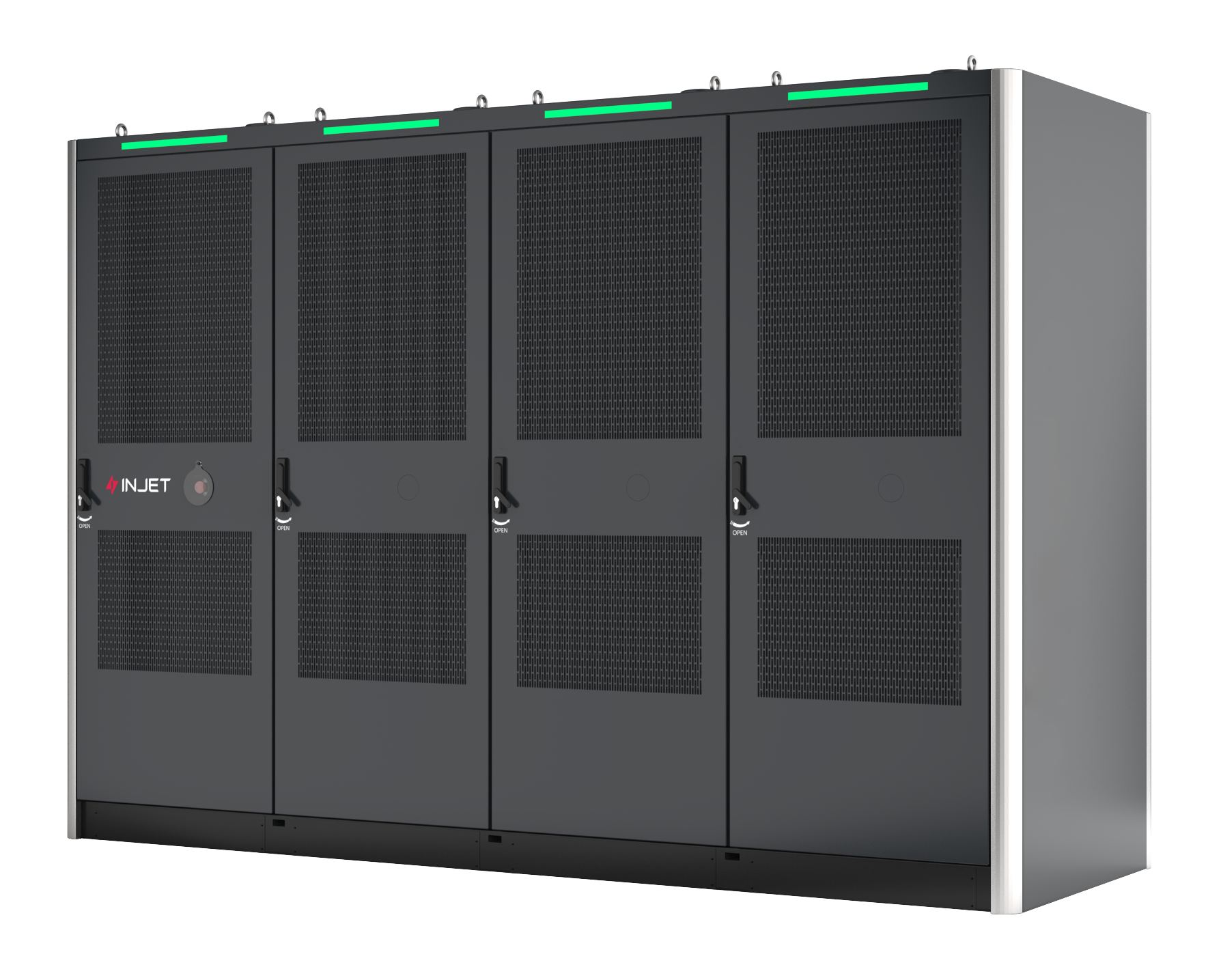

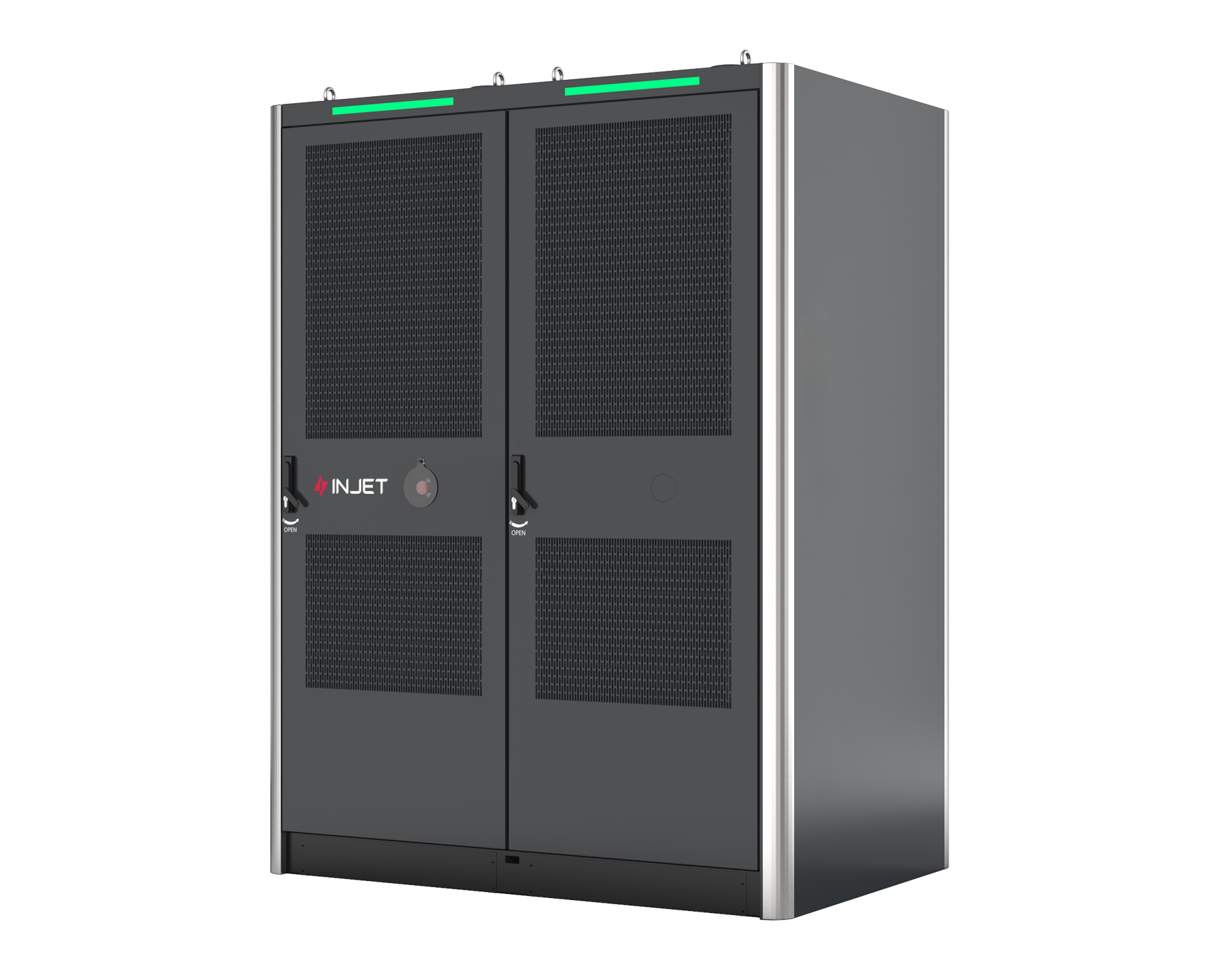
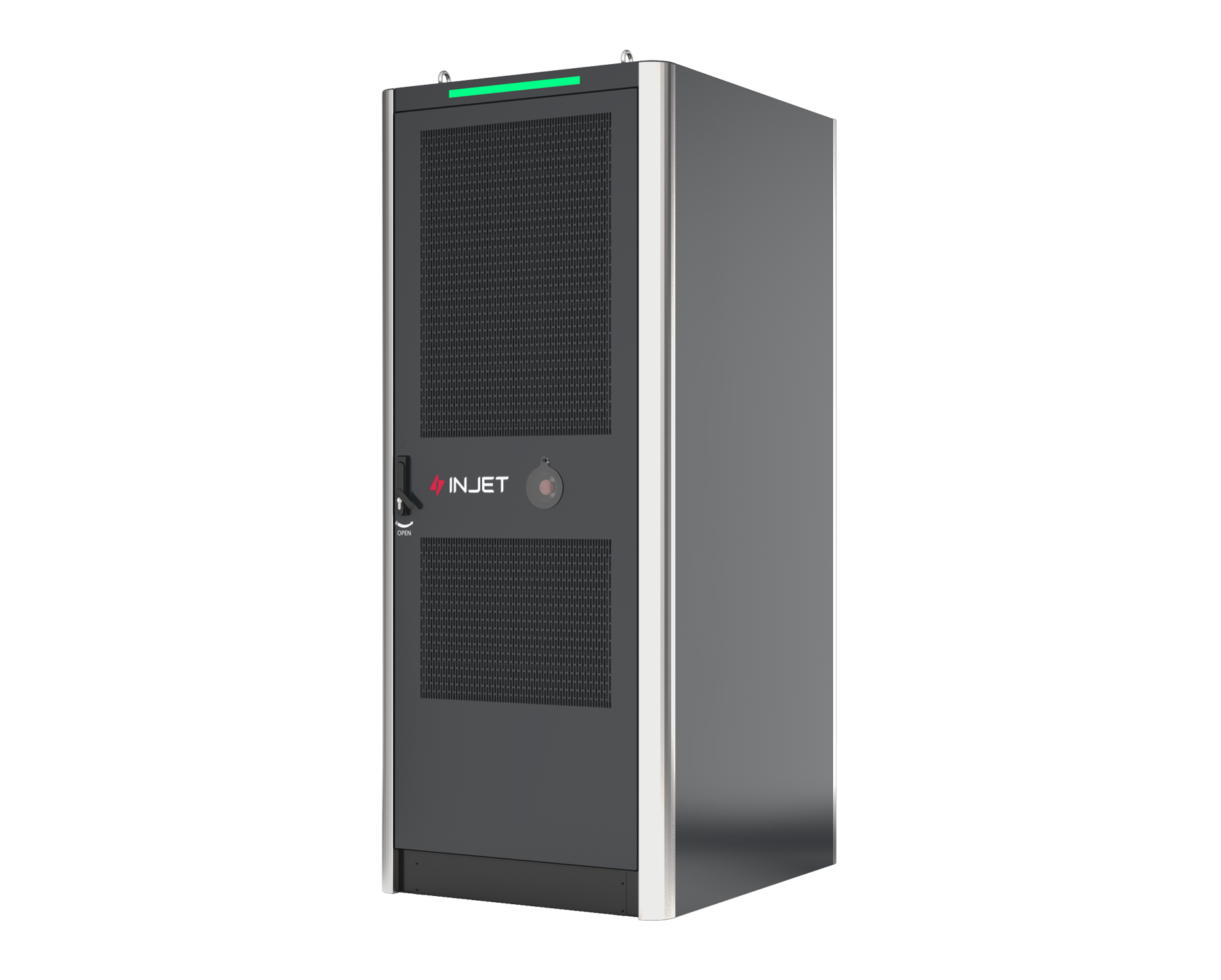
Injet HanYuan - Power Cabinet
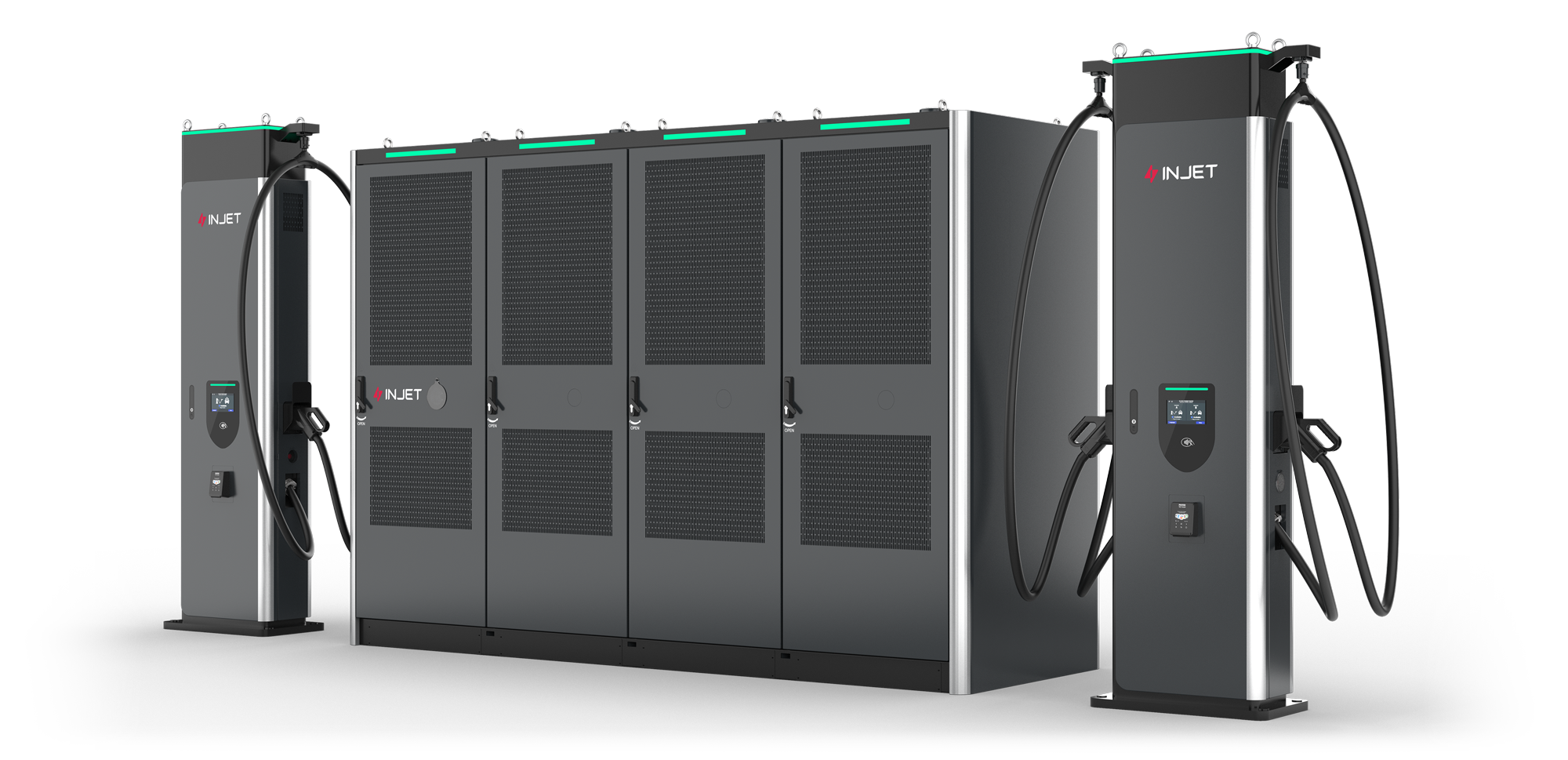
The Power Cabinet is the core of the HanYuan distributed charging system — pooling power across the entire site and intelligently distributing it to where it's needed most. As a split EV charging system architecture, every dispenser connected to the platform draws from a shared Power Pool, not a fixed allocation locked inside a single unit — the foundation of a truly scalable EV charging infrastructure.





Product advantages
Power Pool & Intelligent Scheduling
Efficiency at Scale
Modular Growth
 Cross-Cabinet Power Sharing
All cabinets at an EV charging hub are interconnected through a matrix power distribution structure, forming a single shared Power Pool — the core principle behind any well-designed distributed charging system.
40kW Allocation GranularityPower is distributed in 40kW increments, allowing the system to fine-tune output across multiple dispensers simultaneously based on real demand, with no idle capacity locked inside a single unit.
Departure-Priority Allocation Power is automatically allocated based on each vehicle's required departure time and current state of charge, ensuring time-critical vehicles at fleet depot charging sites are always prioritized — no manual intervention required.
Built for Commercial Fleet Operations Designed for environments where "charged in time" matters more than "charged eventually" — logistics hubs, transit depots, and high-utilization commercial EV charging infrastructure.
Golden Efficiency ZoneThe system concentrates active load onto a subset of power modules, keeping them operating at their optimal 60–80% load range rather than spreading demand thinly across all modules.
Up to 98% Conversion EfficiencyDue to the power sharing between power modules, HanYuan achieves less electricity lost as heat, which means more of what you pay for actually reaches the vehicle — a direct reduction in EV charging energy costs.
Lower Operating Cost Per Session At scale, efficiency gains compound, making a measurable difference to electricity costs over the lifetime of the EV charging power cabinet.
Add Capacity As You Need It Start with the power capacity your current utility connection supports, and add Power Cabinets incrementally as your site's demand grows — without triggering a costly utility upgrade ahead of schedule.
No Rewiring, No DowntimeNew cabinets integrate directly into the existing Power Pool — expansion doesn't require shutting down the system or reconfiguring what's already installed.
Protect Your Initial InvestmentAvoid over-building capacity you don't yet need, or under-building capacity that limits growth — a scalable EV charging infrastructure that matches actual demand, not projected guesswork.
specification
Download the Injet datasheets
Acess the ful technicaldocumentation for the HanYuan distributed charging system, including power cabinet and dispenserspecifications, dimensions,connector options,and installation requirements.

Download Datasheets
Output
| Maximum Output Power | 480kW / 960kW / 1440kW / 1920kW |
| Max Number of DC Outputs For Each Output Type | 8 /16 / 24 / 32 |
| Output DC Voltage Range | 150-1000VDC |
| Maximum DC Current Per Output | Up to 600A per DC circuit |
| Power Module | 40kW SiC |
| Granularity of Output Power | 40kW |
Input
| Maximum Output Power | 480kW / 960kW / 1440kW / 1920kW |
| Max Number of DC Outputs For Each Output Type | 8 /16 / 24 / 32 |
| Output DC Voltage Range | 150-1000VDC |
| Maximum DC Current Per Output | Up to 600A per DC circuit |
| Power Module | 40kW SiC |
| Granularity of Output Power | 40kW |
Operating Conditions
| Maximum Output Power | 480kW / 960kW / 1440kW / 1920kW |
| Max Number of DC Outputs For Each Output Type | 8 /16 / 24 / 32 |
| Output DC Voltage Range | 150-1000VDC |
| Maximum DC Current Per Output | Up to 600A per DC circuit |
| Power Module | 40kW SiC |
| Granularity of Output Power | 40kW |
Dimensions
| Dimension(H*W*D)mm | 2150*750*1100 |
Remote Management
| Remote Managemen | Diagnostics, software updates |
Electrical Protections
| Electrical Protections | Over/undervoltage, surge protection, fire protection, leakage current protection, device overtemperature, overcurrent, etc. |
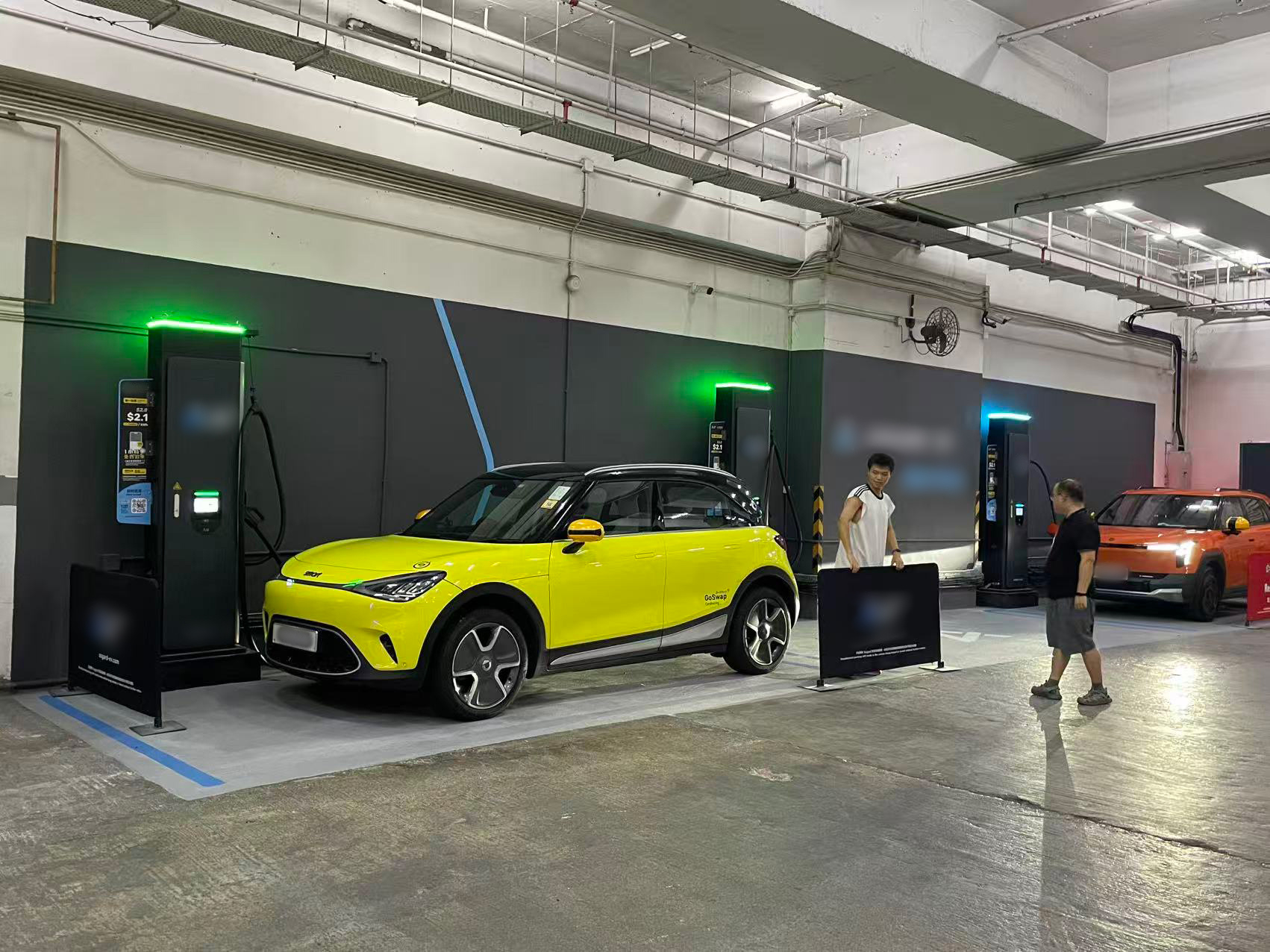
cases


content hub
More
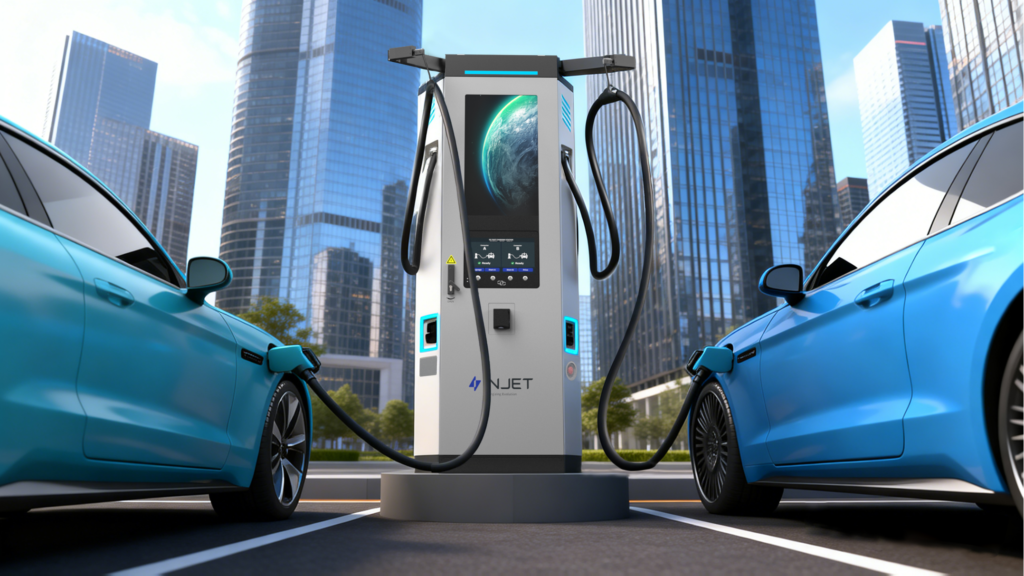
2026-07-02
How to Choose a DC Fast Charger for Your Commercial Fleet | Injet Charger
Fleet electrification in the UK is accelerating — driven by the ZEV Mandate, expanding Clean Air Zones, and the operational economics of running electric vehicles at scale. But the dc fast charger you install today will define your charging throughput, maintenance overheads, and infrastructure flexibility for the next ten years. Getting that decision wrong is an expensive problem to correct mid-deployment.
Learn Detail
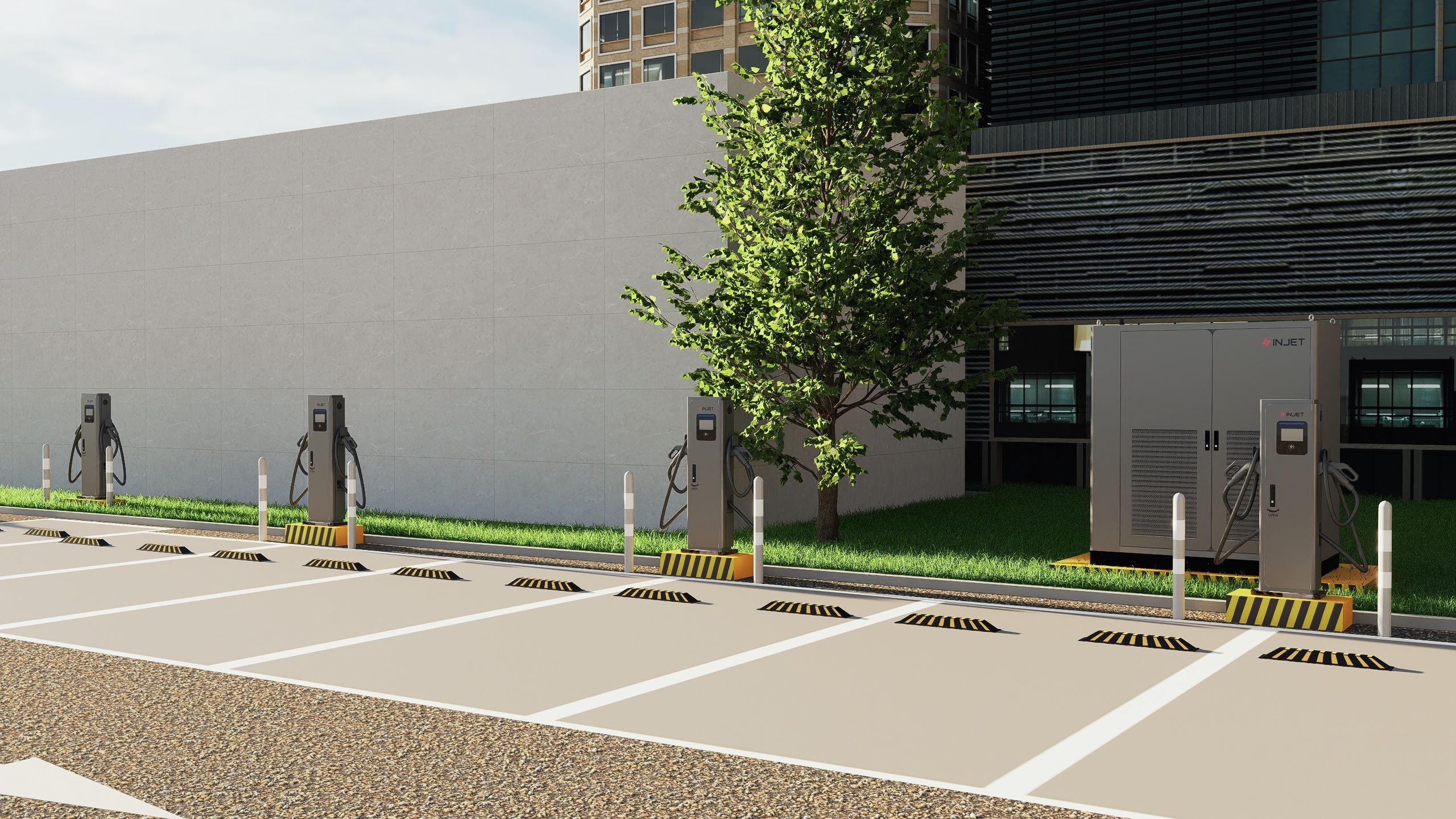
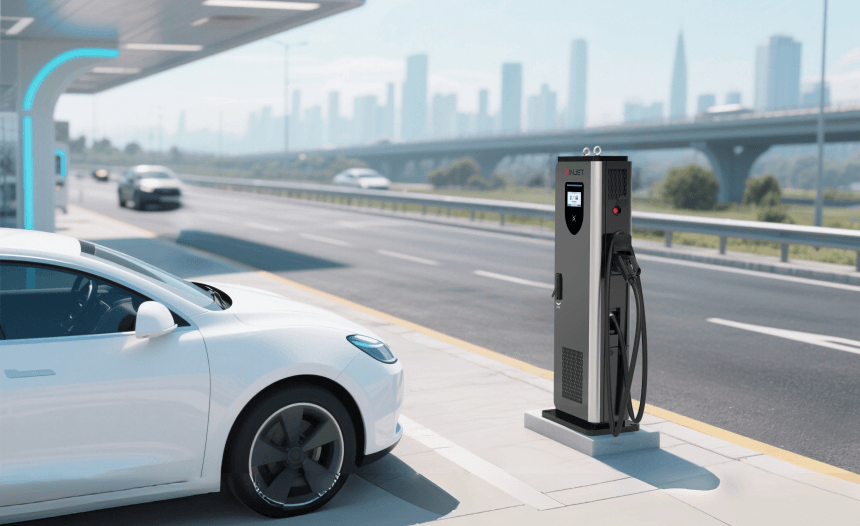
2026-01-04
Liquid-Cooled Ultra-Fast Charging: The Key Technology Unlocking the Future of Fleet Electrification
Learn Detail
related products

Injet HanYuan - Dispenser
Injet HanYuan - Power Cabinet
FAQ
1. What is the role of the HanYuan Power Cabinet in a distributed charging system?
The HanYuan Power Cabinet serves as the centralized power hub of the distributed charging system. It converts AC power into DC power and intelligently allocates output to connected charging dispensers based on real-time charging demand. By separating power conversion from the charging terminals, the system improves power utilization, reduces idle capacity, and enables multiple vehicles to share a common power pool, making it ideal for high-traffic commercial charging environments.
2. How does dynamic power allocation improve charging efficiency?
Instead of assigning fixed power to each charging point, the HanYuan Power Cabinet continuously monitors vehicle charging demand and dynamically distributes available power where it is needed most. This intelligent power-sharing strategy increases charger utilization, shortens waiting times, and maximizes the return on charging infrastructure investment, particularly in fleet depots and public charging hubs with varying charging requirements.
3. Can the HanYuan Power Cabinet be expanded as charging demand grows?
Yes. The HanYuan Power Cabinet features a modular architecture that allows operators to add additional power modules as charging demand increases. Capacity can be expanded without replacing the existing system, protecting the initial investment while providing the flexibility to support future EV adoption and larger charging networks.
4. Is the HanYuan Power Cabinet compatible with energy management systems?
Yes. The HanYuan Power Cabinet is designed to integrate with charging management platforms and energy management systems (EMS). It supports intelligent load management, remote monitoring, and coordinated charging strategies, helping operators optimize energy consumption, reduce peak demand, and improve the overall efficiency of commercial EV charging infrastructure.
5. How does the modular design simplify maintenance?
The cabinet adopts a modular power architecture that allows individual power modules to be serviced or replaced independently without affecting the entire system. This minimizes maintenance time, reduces operational downtime, and simplifies troubleshooting. The modular design also enables preventive maintenance, helping operators maintain high charger availability throughout the equipment lifecycle.
6. What types of charging projects is the HanYuan Power Cabinet suitable for?
The HanYuan Power Cabinet is designed for large-scale commercial charging applications requiring flexible power distribution and future scalability. Typical deployments include fleet depots, logistics centers, public fast charging stations, bus terminals, highway service areas, and commercial parking facilities. Its centralized architecture is particularly well suited for projects where charging demand varies throughout the day.
Leave Your Info,
We'll Reach Out.
We'll Reach Out.

Phone
+86-18980902801

Address
No.19,Tumenjiang RD,Deyang Sichuan CN

Email
info@injet.com